ForkFiesta
ForkFiesta was a collaborative university project where I explored a food-service platform split across services for reservations, delivery, menus, identity, and gateway routing.
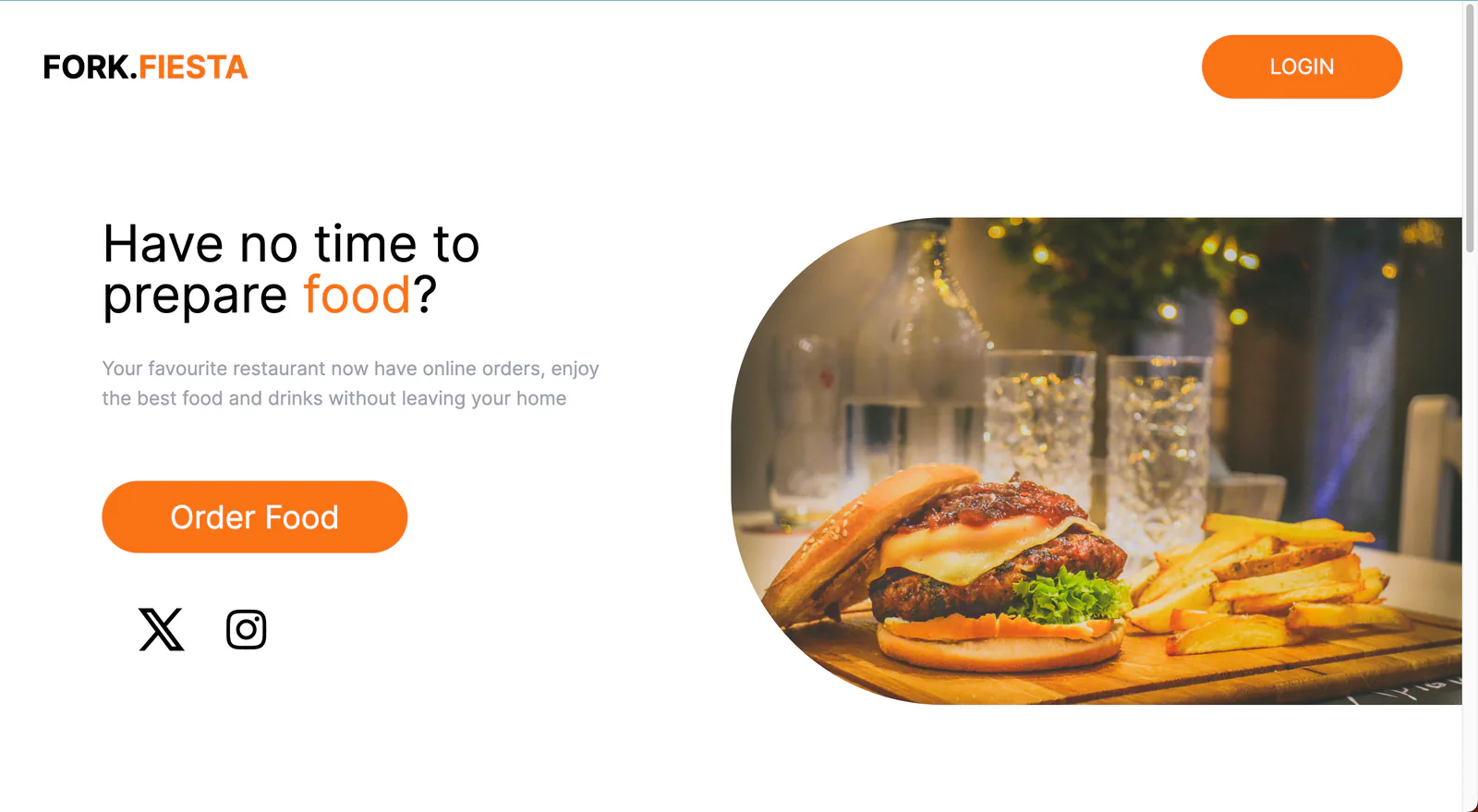
Image 1 of 2: ForkFiesta landing page with restaurant branding, food photography, login, and order actions
01
Problem
As a team, we used a broad restaurant platform to learn how independently built services coordinate data, deployment, and user-facing workflows.
02
Constraints
- I had to work within explicit ownership and API boundaries across several services
- I needed repeatable container setup for both local and orchestrated environments
- I coordinated my work with contributions produced by other team members
- I kept customer, location, and account data out of this case study
03
Technical decisions
- I worked within a service split covering delivery, identity, reservations, menus, and gateway routing
- I used Docker-based packaging as part of the shared development setup
- I practiced orchestration through the project’s Kubernetes configuration
- I contributed within a multi-language system that included a React and Next.js frontend
04
Evidence
- I can point to the public project organization, which preserves the frontend, service, gateway, and orchestration work
- I documented the original frontend structure without publishing its historical screens
- I could not re-run the complete system because the former frontend is unavailable and cross-service execution remains unverified
05
What I learned
Working across ForkFiesta taught me that microservices only help when ownership, contracts, and deployment boundaries are clearer than the simpler alternative.