Olimpocraft
Olimpocraft was my attempt to explore Ancient Greece through game-inspired navigation and browser-based three-dimensional scenes instead of a conventional educational website.
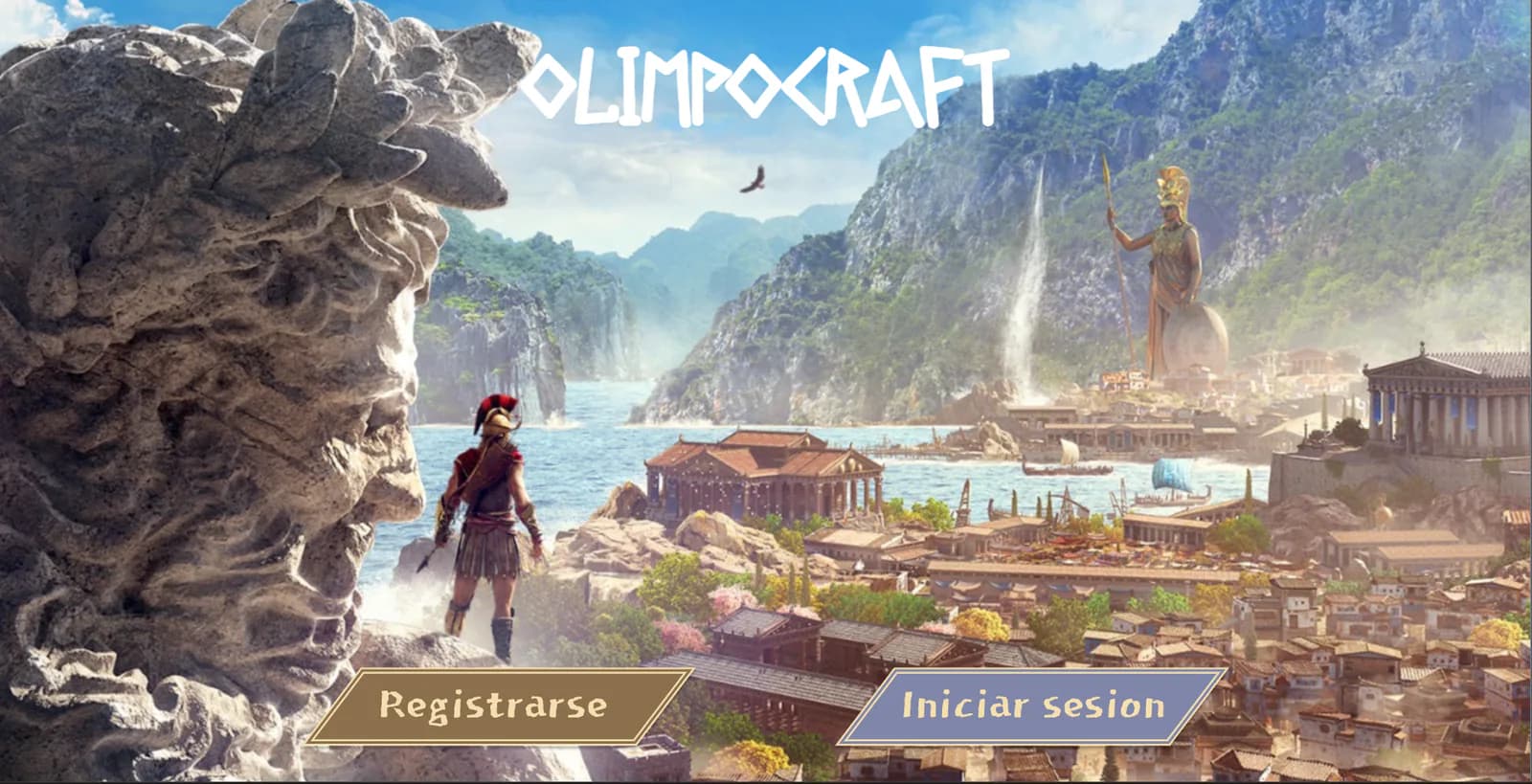
Image 1 of 8: Olimpocraft welcome screen with Greek-themed artwork and registration and sign-in buttons
01
Problem
Static pages felt too passive to me for this subject, so I explored an environment users could navigate, question, and learn from.
02
Constraints
- I had to account for WebGL support and different device capabilities
- I needed the educational structure to remain understandable alongside the game mechanics
- I treated every historical illustration and background image as a licensed asset rather than assume I could publish it
- I left artwork with unclear authorship or licensing out of the public scope
03
Technical decisions
- I used Next.js and React for the interface
- I designed the experience around browser-based three-dimensional scenes
- I worked with Node.js and MongoDB in the original project stack
- I organized the educational material through game-inspired exploration, clues, and quizzes
04
Evidence
- I still have the public application source and interface structure; the current demo does not establish working WebGL or gameplay
- I reached the current demo, but it fails after the browser cannot create a WebGL context
- I have not included the historical artwork in the public scope because I still need to confirm its authorship and license
05
What I learned
Olimpocraft made one thing clear to me: an ambitious interactive lesson still needs graceful fallbacks and artwork I can clearly license or create myself.