StrokeE System
I contributed to StrokeE, an academic health-emergency prototype designed around five role-specific PWAs spanning the patient and emergency-contact side, operators, paramedics, clinical staff, and administrators.
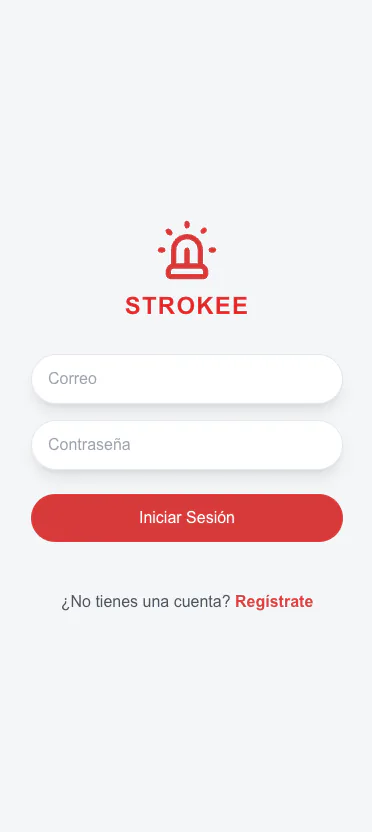
Image 1 of 12: StrokeE mobile login screen with empty email and password fields
01
Problem
As a team, we explored how one flow could preserve context across the people and handoffs in a stroke emergency without collapsing every responsibility into the same interface.
02
Constraints
- I treated health and identity data as strictly private
- We kept each emergency role and its time-sensitive state clearly separated
- Across the team, we needed a consistent coordination model across five applications
- I left patient, clinical, and operational records out of this case study
03
Technical decisions
- We designed separate progressive web applications for the different roles
- Our surviving project notes list TypeScript, React, and Next.js for the interfaces
- Our surviving notes also list Node.js, MongoDB, and Firebase as supporting technologies
- We framed the concept around a shared emergency state moving through separate role surfaces
04
Evidence
- I verified that the public patient application still reaches an empty login screen without health data
- I can show redacted interface screens for the patient, emergency-contact, operator, clinic, and administrator views
- I do not have the source or authenticated environment needed to verify the cross-role emergency workflow
05
What I learned
StrokeE taught me to make role, consent, data access, and handoff state explicit before optimizing a health-emergency flow for speed or breadth.